


How to Choose the Right Tires for Toronto’s Pothole-Packed Roads (Without Overpaying)
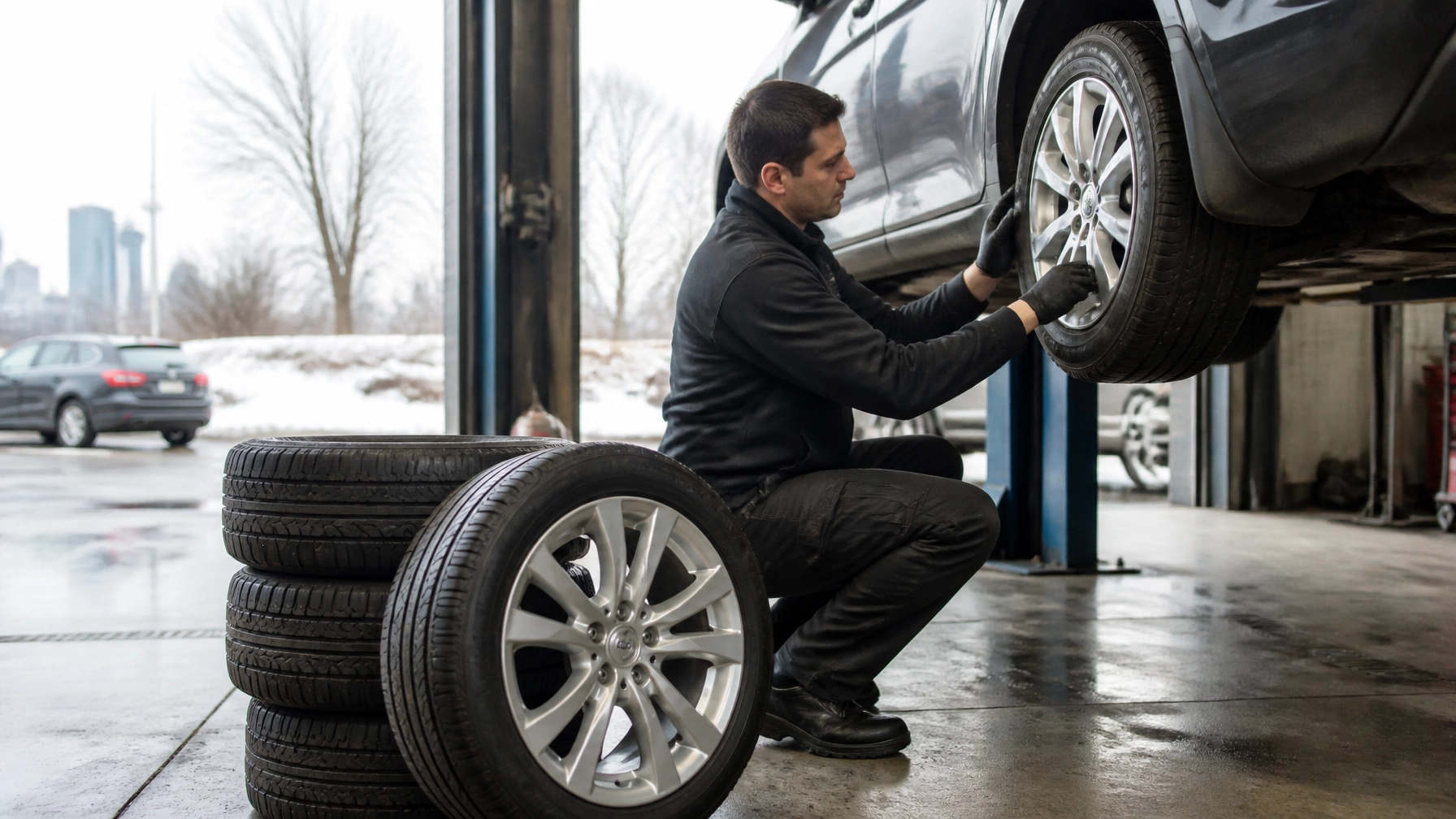
Toronto roads can be hard on a vehicle. After a winter of freezing and thawing, familiar routes can fill with sharp-edged potholes, broken pavement, and uneven repairs. Even careful drivers can end up with a bent wheel, a sidewall bulge, or tires that wear unevenly after one rough impact.
That makes choosing the right tires about more than finding the lowest advertised price. The best value comes from matching your tires to your vehicle, driving habits, and Toronto’s changing road conditions: then protecting that investment with correct inflation, balancing, rotation, and alignment.
Here’s how to choose tires that offer the right balance of safety, durability, comfort, and cost.
Start With the Correct Tire Size
Your vehicle’s recommended tire size is listed on the driver’s door-jamb sticker and in the owner’s manual. It may look something like 225/55R17 97H. Each part provides important information:
- 225 is the tire width in millimetres.
- 55 is the aspect ratio, or sidewall height as a percentage of the width.
- R17 indicates a radial tire designed for a 17-inch wheel.
- 97 is the load index.
- H is the speed rating.
It’s important to use the correct size, load index, and speed rating for your vehicle. A tire that looks like a bargain may not be suitable if it cannot safely carry your vehicle’s weight or meet its handling requirements.
Why Sidewall Height Matters on Toronto Roads
The sidewall is the tire’s first line of defence when you hit a pothole. A taller sidewall contains more air and provides more cushioning between the road and the wheel. Very low-profile tires, on the other hand, have less room to absorb a sharp impact. That can increase the risk of wheel damage or a sidewall failure.
If your vehicle allows it, moving to a smaller approved wheel with a taller tire sidewall can be a smart choice for pothole-heavy roads. For example, a vehicle equipped with 18-inch wheels may also have a manufacturer-approved 17-inch wheel and tire combination. However, this should never be guessed. The replacement setup must maintain the correct overall diameter, clearance, load rating, and speed rating.
Ask a qualified technician to confirm your options before buying.
Choose the Tire Type That Fits Your Driving
Toronto’s climate gives you several tire choices, but each has trade-offs.
Dedicated Winter Tires
If you regularly drive in snow, slush, ice, or cold temperatures, dedicated winter tires provide the strongest seasonal performance. Their rubber compounds remain more flexible in cold weather, and their tread patterns are designed to improve grip in snow and on icy surfaces.
The Ontario government notes that winter tires can improve traction and control in winter conditions and shorten braking distances by as much as 25%. It also recommends installing four winter tires rather than mixing different tire types.
Look for the Three-Peak Mountain Snowflake, or 3PMSF, symbol on the sidewall. This symbol identifies tires designed to meet a standardized severe-snow performance requirement.
All-Weather Tires
All-weather tires are designed for year-round use and carry the 3PMSF symbol. They can be a practical option if you want to avoid two seasonal sets and still need more winter capability than a basic all-season tire provides.
They are a compromise, though. A good all-weather tire may be convenient, but a dedicated winter tire generally offers better performance in genuine winter conditions. Your choice should reflect how often you drive, where you travel, and whether you need your vehicle every day during a Toronto snowstorm.
All-Season Tires
All-season tires are built for warmer conditions and light winter use. Despite the name, they are not designed to deliver the same cold-weather grip as certified winter tires. Ontario advises that all-season tires can begin losing grip at around 7°C.
They may be suitable for drivers who use a second vehicle in winter, drive very little during snow, or live in an area with limited winter exposure. For most Toronto drivers who commute year-round, it’s worth discussing a winter-capable option.
Don’t Ignore Load Rating and Sidewall Construction
A tire’s load index tells you how much weight it can safely support. It is especially important for SUVs, pickup trucks, vans, and vehicles that regularly carry passengers or cargo.
You may also see markings such as XL, meaning Extra Load, or Reinforced. These tires are built to carry a higher load at a specified pressure and may offer additional sidewall strength. They can be worth considering for rough roads, but they are not automatically the best option for every vehicle.
An XL tire can have a firmer ride and may cost more. It should be selected only when it is compatible with your vehicle and driving needs. The goal is not to buy the most heavily reinforced tire available; it is to choose a tire with the right construction for your car.
Compare the Total Cost, Not Just the Price Tag
The cheapest tire is not always the least expensive choice over time. Before comparing quotes, look at the complete package:
- Tire price
- Mounting and balancing
- New valve stems, if needed
- Tire pressure monitoring system service
- Seasonal changeover
- Storage
- Alignment or inspection
- Warranty coverage
- Expected tread life
- Fuel economy and ride comfort
A tire with a lower purchase price may wear quickly or provide less wet-weather grip. Another tire may cost more initially but last longer and perform better in rain, slush, and changing temperatures.
Ask what is included in the quote. A clear, itemized estimate makes it easier to compare options without being surprised by extra charges later.
At Cochrane Automotive, you can discuss a wide selection of tire brands and options with a team that looks at the complete picture: not just the most expensive choice. The right tire depends on your vehicle, budget, commute, and priorities.
Make Sure the Installation Is Done Properly
A new set of tires can only perform properly if the wheels are installed and adjusted correctly.

Balancing Prevents Unwanted Vibration
A balanced tire and wheel assembly rotates smoothly. If the balance is off, you may notice a vibration through the steering wheel or seat, particularly at highway speeds. Toronto’s patched pavement and rough construction zones make these symptoms easy to dismiss, but they should not be ignored.
Ask whether standard balancing is appropriate or whether road-force balancing may help. Road-force equipment can identify stiffness variations in the tire and wheel assembly that a conventional balance may not detect.
Alignment Protects Your Tire Investment
Potholes can shift suspension and steering angles even when there is no obvious damage. If the wheels are no longer pointing in the correct direction, the tread can scrub against the road instead of rolling evenly.
A wheel alignment in Toronto may be needed if:
- Your vehicle pulls left or right
- The steering wheel sits off-centre
- The vehicle feels unstable
- You notice feathering or inner-edge wear
- The steering wheel vibrates after hitting a pothole
- Your new tires begin wearing unevenly
Having the alignment checked when you install new tires can help them wear evenly and last longer. It is a relatively small maintenance step compared with replacing a prematurely worn set.
Check Tire Pressure More Often in Toronto’s Weather
Temperature changes affect tire pressure. Cold air reduces pressure, while warmer weather raises it. That means a tire that looked fine in late summer may be underinflated after a sharp overnight temperature drop.
Use the pressure listed on your vehicle’s door-jamb sticker: not the maximum pressure printed on the tire sidewall. Check all four tires when they are cold, ideally at least once a month and before long trips.
Underinflated tires flex more, reduce fuel efficiency, and are more vulnerable to damage when they strike a pothole. Overinflation can reduce the contact patch and make the ride harsher. Correct pressure is one of the simplest ways to improve tire life without spending more money.
Inspect Your Tires After a Pothole Impact
If you hit a pothole hard, inspect the tire as soon as it is safe to do so. Look for:
- A bulge or bubble on the sidewall
- A cut or exposed cord
- A sudden pressure loss
- A bent or cracked wheel
- New vibration
- A vehicle that pulls to one side
A sidewall bulge usually means the internal structure has been damaged. It is not safely repaired with a plug or patch and generally requires tire replacement. If you experience a severe impact, have the tire, wheel, suspension, and alignment checked before continuing with regular highway driving.
You can also report Toronto potholes through the City’s 311 service. If your vehicle has been damaged, document the location, date, photos, and repair details promptly. The City states that pothole damage claims must be submitted within 10 days of the incident.
Choose Tire Services That Offer Long-Term Value
Buying tires is only one part of keeping your vehicle safe. Seasonal changeovers, tire rotation, storage, balancing, puncture inspection, and alignment all affect how long your tires last.
Cochrane Automotive provides tire and wheel services for all makes and models, with a wide range of brands to suit different vehicles and budgets. As a dealership alternative, we provide professional service without dealership pricing, along with courtesy vehicles and shuttle services to help keep your day moving.
Our parts and labour are also backed by a 3-year/60,000 km warranty, giving you added confidence in the work performed.
The Bottom Line
For Toronto’s pothole-packed roads, look for the correct manufacturer-approved size, a practical sidewall height, suitable load and speed ratings, and a tire type that matches your winter driving. Avoid choosing based on price alone. Proper installation, inflation, rotation, and alignment can make just as much difference as the tire brand itself.
If you’ve been searching for a mechanic near me or reliable auto repair in Toronto, Cochrane Automotive can help you compare your options and choose tires that make sense for your car and your budget. Book your tire services appointment today for straightforward advice, professional installation, and a safer, smoother drive through Toronto.
Related Posts
Will Your Battery Survive a Toronto Winter? A Cold-Weather Starting Checklist
A battery can seem perfectly healthy in September and still leave you stranded on the first truly cold morning of the season. Toronto’s winter brings freezing temperatures, short trips, heavy electrical loads, and stop-and-go traffic: conditions that expose a weak…

How to Find an Honest Mechanic Near You in Toronto (Without Getting Ripped Off)
Searching for a mechanic near me can feel stressful, especially when you’re worried about paying for repairs you don’t understand: or being pressured into work your vehicle may not need. The good news is that finding an honest auto repair…
Is Your Car Ready for an EV Future? How We Service Hybrids and Electric Vehicles at Cochrane
Toronto’s roads are changing. You may already see more battery-electric vehicles, plug-in hybrids, and conventional hybrids on the Gardiner, around Etobicoke, and throughout the GTA. As charging infrastructure expands and more drivers consider making the switch, one question comes up…