


Is Your Car Ready for an EV Future? How We Service Hybrids and Electric Vehicles at Cochrane
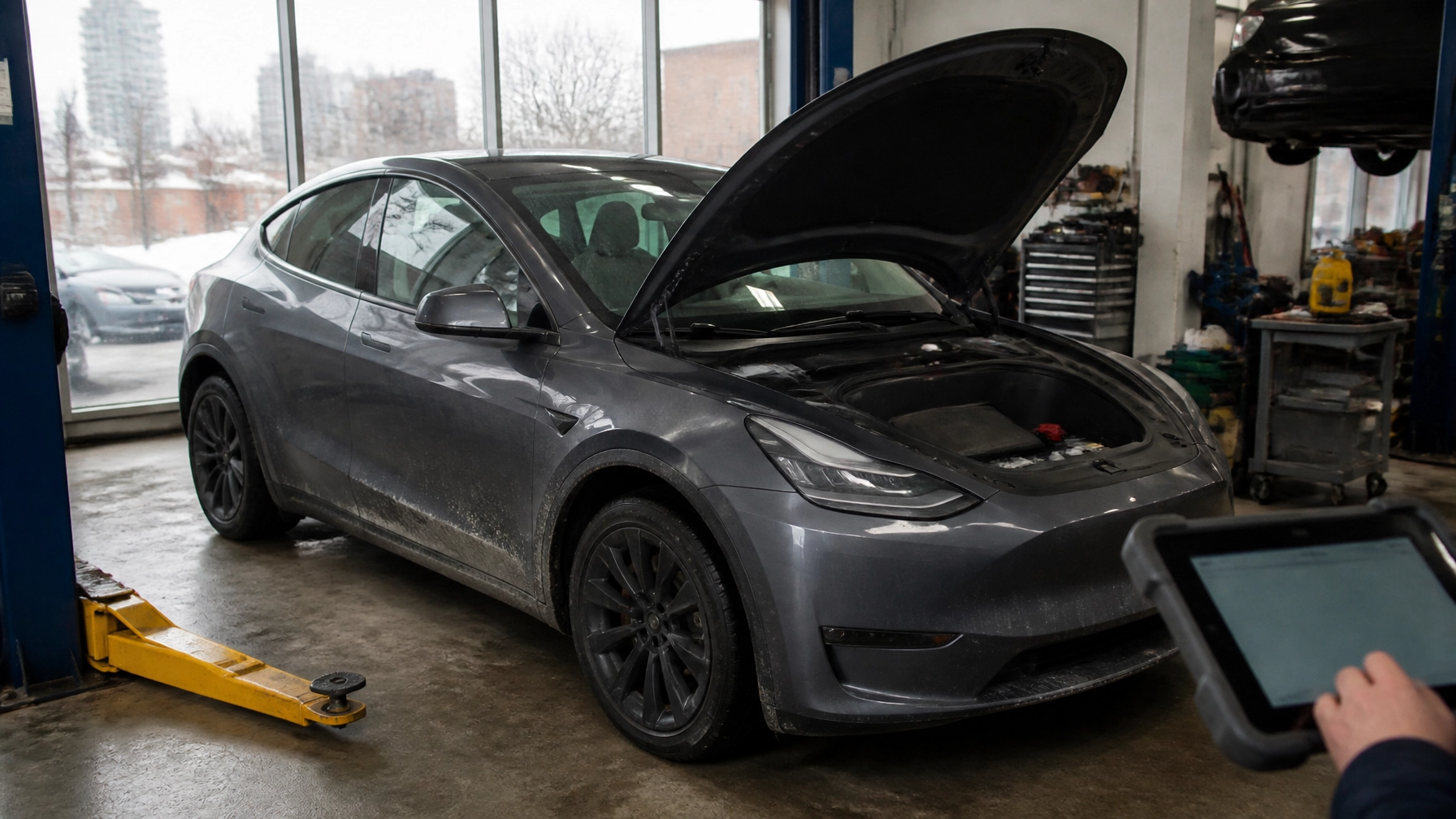
Toronto’s roads are changing. You may already see more battery-electric vehicles, plug-in hybrids, and conventional hybrids on the Gardiner, around Etobicoke, and throughout the GTA. As charging infrastructure expands and more drivers consider making the switch, one question comes up more often:
Where will you take an EV or hybrid when it needs service?
The answer is not always as simple as visiting the dealership. EVs and hybrids use different systems, different diagnostic processes, and: especially in the case of EVs: high-voltage components that require proper procedures and equipment. At the same time, Canada is facing a nationwide shortage of automotive technicians, including professionals with specialized EV skills.
At Cochrane Automotive, we are preparing for that shift rather than waiting for it to arrive. Our government-licensed technicians service all makes and models, including modern EVs and hybrids, using cutting-edge diagnostic technology and the same straightforward approach we bring to every vehicle that enters our shop.
The EV transition is already here
Electric vehicles are no longer limited to a few early adopters. Toronto drivers are choosing EVs and hybrids for commuting, family transportation, delivery work, and everyday trips across the city. That means independent repair shops need to understand how these vehicles work: and how their maintenance differs from a gas-powered car.
Canada’s transition has also exposed a workforce challenge. Natural Resources Canada has identified a shortage of workers with the skills needed for zero-emission vehicle maintenance and repair. Reporting from Electric Autonomy Canada noted that the auto industry reported 11,965 job vacancies in the third quarter of 2023, compared with 5,730 in 2021. The same report described the combination of rising EV sales, too few automotive technicians, and a relatively small number of workers trained in EV service as a serious skills gap.
More recently, CBC reported on the need for more EV service training, highlighting the importance of high-voltage safety, battery diagnostics, power electronics, and charging-system knowledge.
For vehicle owners, this means choosing a repair facility is becoming more important. You need more than a shop that can read a basic fault code. You need technicians who understand that an EV is not simply a gas vehicle with the engine removed.
EVs need less routine maintenance: but not no maintenance
One of the advantages of a fully electric vehicle is that it has fewer moving parts than a conventional vehicle. There is no engine oil, spark plug system, fuel pump, exhaust system, or traditional transmission to maintain.
That does not mean you can ignore service.
According to the U.S. Department of Energy’s Alternative Fuels Data Center guidance on EV maintenance, all-electric vehicles still require attention to their brakes, tires, cooling systems, battery systems, and other components. Hybrids and plug-in hybrids also have gasoline engines, so they continue to require many of the maintenance services associated with conventional vehicles.
Think of it this way: an EV may have fewer mechanical “organs,” but it relies heavily on electronics, software, thermal management, and precise sensors. If a conventional vehicle is like a machine made of gears and belts, an EV is more like a machine made of motors, computers, batteries, and cooling circuits. Both need regular inspection: just for different reasons.
What we look at when servicing an EV or hybrid
Every vehicle is different, so the correct service schedule depends on the make, model, mileage, and manufacturer recommendations. Our approach begins with understanding the vehicle and the concern before recommending any work.
Diagnostic systems and warning lights
A warning light in an EV or hybrid should not be ignored simply because the vehicle still drives normally. Modern vehicles monitor battery temperature, charging performance, motor operation, braking systems, insulation, and other electrical functions.
At Cochrane Automotive, our inspection and diagnostics services use cutting-edge diagnostic technology to help identify the root cause of warning lights, drivability concerns, electrical faults, and other issues. Proper diagnosis matters because replacing parts based on guesswork can become expensive quickly: especially when a vehicle contains advanced electronic components.
High-voltage safety
Hybrid and electric vehicles contain high-voltage systems that are fundamentally different from a conventional 12-volt electrical system. Orange cables and clearly marked components indicate that extra care is required.
Service work involving these systems must follow the vehicle manufacturer’s procedures and appropriate safety practices. A professional inspection is not the same as casually disconnecting a battery in your driveway. If your EV or hybrid has been involved in a collision, has charging problems, displays a high-voltage warning, or develops unusual battery-related symptoms, arrange an assessment with a qualified repair facility.
Our technicians take a careful, diagnostic-first approach. We do not treat an unfamiliar warning as a reason to guess. We inspect, test, explain what we find, and outline the next practical step.

Battery and thermal-management checks
The main traction battery is designed for long-term use, but it operates within carefully controlled temperature ranges. Many EVs use liquid cooling to manage the battery, motor, and power electronics. A problem with a coolant level, hose, pump, sensor, or thermal-management circuit can affect performance and charging.
Battery concerns may show up as reduced range, charging interruptions, a warning message, or unusual changes in performance. These symptoms do not automatically mean the battery pack needs replacement. Testing and diagnosis are essential before making that conclusion.
Your vehicle’s owner’s manual remains the authority for battery inspections, coolant replacement, charging guidance, and warranty coverage. We can help you understand what your vehicle requires and identify related maintenance concerns during a service visit.
Brakes and regenerative braking
Regenerative braking allows an EV or hybrid to recover some energy when slowing down. Because the electric motor helps decelerate the vehicle, friction brake pads may wear more slowly than they would on a conventional car.
However, the brake system still needs regular attention. Toronto’s moisture, road salt, freeze-thaw cycles, and long periods of light braking can contribute to corrosion or sticking components. Brake fluid also absorbs moisture over time, regardless of whether the vehicle is powered by gasoline, electricity, or both.
Our brake services include inspections of pads, rotors, calipers, hoses, and brake fluid. A quiet brake system is not necessarily a healthy one, and reduced pad wear does not eliminate the need for inspection.
Tires, suspension, and alignment
EVs are often heavier than comparable gas-powered vehicles, and electric motors can deliver immediate torque. That combination can place additional demands on tires, especially if you accelerate hard or drive frequently over rough city streets.
Regular tire-pressure checks, rotations, wheel balancing, and alignment inspections help protect handling and tire life. Toronto potholes can also affect wheels, steering, and suspension components before you notice an obvious problem.
Cochrane provides tire and wheel services for seasonal changeovers, repairs, balancing, alignments, and tire maintenance. These services are just as important for an EV as they are for a classic car or a gas-powered commuter.
Why choose an independent EV and hybrid service option?
A dealership may be the right choice for certain warranty or manufacturer-specific repairs. But routine maintenance and diagnostics do not always require dealership pricing.
An experienced independent shop can give you another option: professional equipment, licensed technicians, clear communication, and a service plan based on what your vehicle actually needs. At Cochrane Automotive, we have served Toronto drivers since 1972, and we work on everything from vintage classics to modern, technology-filled vehicles.
We also back eligible parts and labour with a 3-year/60,000 km warranty, helping you feel more confident about approved repairs. Courtesy vehicles and shuttle services are available to help keep your day moving while your vehicle is in the shop.
So, if you are searching for “auto repair Toronto,” “mechanic Toronto,” or a “mechanic near me” for a hybrid or EV, look for a facility that combines modern diagnostic capability with honest advice. The technology may be newer, but the fundamentals remain the same: inspect carefully, explain clearly, and repair the problem properly.
Get ready for the next stage of driving
Your EV or hybrid still needs a relationship with a trusted repair shop. The service may involve fewer oil changes and fewer traditional engine repairs, but it places greater emphasis on diagnostics, electrical systems, battery cooling, brakes, tires, and safety procedures.
Cochrane Automotive is ready to support Toronto drivers as the vehicle landscape continues to evolve. Our government-licensed technicians service all makes and models, including modern EVs and hybrids, with dealership-alternative value and cutting-edge diagnostic technology.
Book an inspection or diagnostic appointment with Cochrane Automotive and get informed, reliable service for the vehicle you drive today: and the technology you may choose tomorrow.
Related Posts
Will Your Battery Survive a Toronto Winter? A Cold-Weather Starting Checklist
A battery can seem perfectly healthy in September and still leave you stranded on the first truly cold morning of the season. Toronto’s winter brings freezing temperatures, short trips, heavy electrical loads, and stop-and-go traffic: conditions that expose a weak…


How to Find an Honest Mechanic Near You in Toronto (Without Getting Ripped Off)
Searching for a mechanic near me can feel stressful, especially when you’re worried about paying for repairs you don’t understand: or being pressured into work your vehicle may not need. The good news is that finding an honest auto repair…
How to Choose the Right Tires for Toronto’s Pothole-Packed Roads (Without Overpaying)
Toronto roads can be hard on a vehicle. After a winter of freezing and thawing, familiar routes can fill with sharp-edged potholes, broken pavement, and uneven repairs. Even careful drivers can end up with a bent wheel, a sidewall bulge,…