


7 Mistakes You’re Making with Wheel Alignment in Toronto (And How to Fix Them)
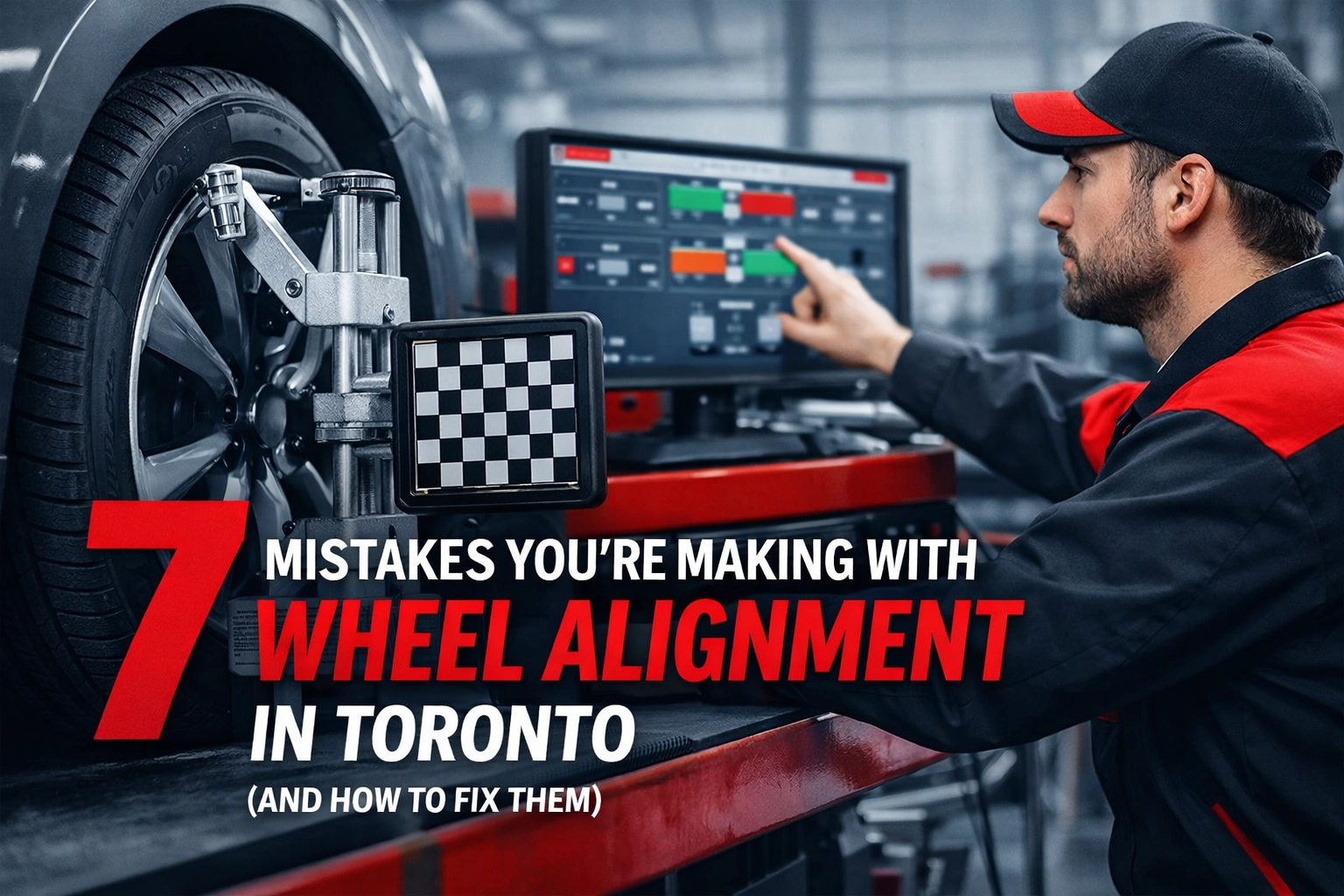
Toronto drivers have it tough. Between the stop-and-go traffic on the 401, the salt-heavy winters that eat away at metal, and the legendary potholes that seem to appear overnight on Eglinton Avenue, your vehicle’s suspension takes a beating.
One of the most critical, yet often misunderstood, aspects of vehicle maintenance is wheel alignment. It isn’t just about making sure your car goes straight when you let go of the wheel (though that’s part of it). Proper alignment is the “spine” of your car’s handling. When it’s off, everything else: from your fuel economy to your safety: starts to suffer.
At Cochrane Automotive, we see hundreds of cars every month, and we’ve noticed some recurring patterns. Most drivers are making the same handful of mistakes that lead to premature tire wear and expensive repairs. Here are the seven mistakes you’re likely making with your wheel alignment and exactly how to fix them.
1. Treating Potholes Like “Minor” Incidents
We’ve all been there. You’re driving through Etobicoke or downtown Toronto, and thwack: you hit a crater that feels like it should have swallowed your entire wheel. If the tire didn’t pop and the rim isn’t bent, you probably keep driving and forget about it.
This is mistake number one. A single significant impact can knock your alignment out of spec by just a fraction of a degree. You won’t feel it immediately, but over the next 1,000 kilometers, that tiny misalignment will start “scrubbing” the rubber off your tires.
How to fix it: If you hit a significant pothole or curb, don’t wait for symptoms. Bring your car in for a quick alignment check. Think of it like a quick check-up after a fall; it’s better to confirm everything is straight now than to buy four new tires in six months.
2. Ignoring “Feathered” or Uneven Tire Wear
Do your tires look a little “weird” on the edges? If you notice that the inside edge of your tire is wearing down faster than the outside, or if the tread feels smooth in one direction but sharp in the other (a condition called “feathering”), you have an alignment problem.
Many drivers assume this is just “old age” for the tire. It isn’t. Uneven wear is a symptom of a mechanical misalignment or a failing suspension component. If you ignore it, you’re essentially throwing money away. You can read more about how this affects your vehicle in our guide on wheel alignment and tire wear.
How to fix it: Run your hand across the tread of your tires once a month (when they are cool!). If it feels uneven, it’s time for an inspection. Catching this early can save a set of tires that might cost $800 to $1,200 to replace.

3. Confusing Vibration with “Just a Balancing Issue”
When your steering wheel starts to shake at highway speeds on the Gardiner, your first thought is probably, “I need to get my wheels balanced.” While that’s often true, vibration can also be a sign of a severe alignment issue or worn-out suspension parts.
If your wheels are out of alignment, they aren’t working together; they are fighting each other. This “tug-of-war” creates friction and vibration that can feel very similar to an unbalanced wheel. If you only balance the tires but ignore the alignment, the vibration will return, and your suspension will continue to degrade. For high-precision needs, we often recommend Road Force Balancing combined with a full alignment check.
How to fix it: When you go in for a balance, ask for a “four-wheel alignment check.” A professional shop like Cochrane Automotive uses laser-guided systems to see exactly where the wheels are pointing.
4. The “Crooked Logo” Syndrome
Next time you’re driving straight on a flat road, look at the logo in the center of your steering wheel. Is it perfectly level? If you have to hold the steering wheel at the “11 o’clock” or “1 o’clock” position just to keep the car in its lane, your alignment is significantly off.
Many drivers adapt to this without realizing it. Your brain compensates for the drift, and you stop noticing that you’re constantly fighting the car. This puts unnecessary stress on your arms and your vehicle’s steering rack.
How to fix it: A professional alignment will “center” the steering wheel. This involves adjusting the tie rods to ensure that when the steering wheel is neutral, the wheels are perfectly parallel to the vehicle’s centerline.
5. Not Checking Tire Pressure Before the Alignment
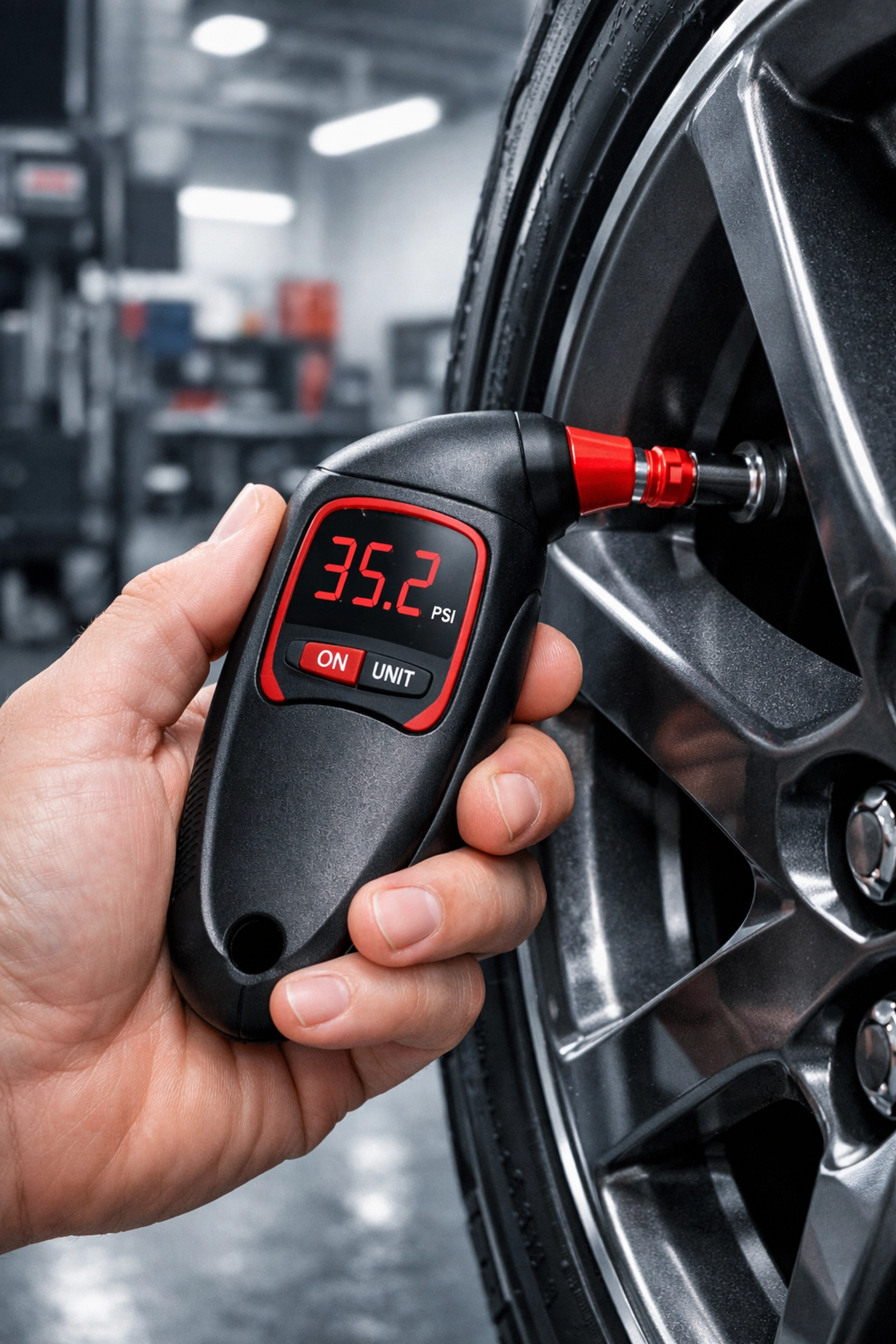
This is a classic “pro tip” mistake. Sometimes a vehicle pulls to the left or right not because the metal components are bent, but because the air pressure is uneven. If your front-left tire has 25 PSI and your front-right has 35 PSI, the car will naturally pull toward the softer tire.
Drivers often come in asking for an alignment when all they really need is a gas station air pump. However, if you do get an alignment done while your tire pressures are uneven, the technician might “adjust” your car to a false baseline.
How to fix it: Always check your tire pressure when the tires are cold. Ensure they match the sticker inside your driver-side door jamb. If the pull persists, then it’s definitely a mechanical alignment issue.
6. Skipping Alignment During Seasonal Tire Swaps
In Toronto, we live the “two-set” life: winter tires and all-seasons (or summers). A common mistake is swapping your tires in November and April without checking the alignment.
Think about it: you’re putting on a fresh set of expensive winter rubber, designed to keep you safe on icy Toronto side streets. If your alignment is off, those soft-compound winter tires will wear out twice as fast as your harder summer tires. Furthermore, the act of changing wheels is the perfect time to inspect the steering and suspension system.
How to fix it: Make it a habit to get an alignment check at least once a year, preferably during your spring tire swap. This ensures that the potholes of winter haven’t ruined your car’s stance for the summer driving season.
7. Waiting for “Total Failure”
The biggest mistake of all is waiting until the car is difficult to drive. Alignment issues are progressive. They start as a tiny financial leak (slightly lower fuel economy) and turn into a flood (ruined tires, worn ball joints, and failing steering racks).
By the time you hear “clunking” noises or feel the car darting across the lane, the damage is already done. You’re no longer looking at a $150 alignment; you’re looking at a $1,500 suspension or engine-related repair.
How to fix it: Be proactive. A wheel alignment is like an oil change for your tires. It’s preventative maintenance that pays for itself in extended tire life and better gas mileage.

Why Cochrane Automotive is Your Alignment Partner
At Cochrane Automotive, we don’t just “set it and forget it.” We understand the specific geometry of your vehicle, whether you’re driving a nimble compact for downtown commuting or a heavy-duty SUV for family trips to the cottage.
Our technicians use state-of-the-art diagnostic equipment to measure three key angles:
- Camber: The inward or outward tilt of the tire when viewed from the front.
- Toe: The degree to which your tires turn inward or outward when viewed from above.
- Caster: The angle of your steering axis, which helps with balance and cornering.
Getting these three “in the green” ensures your car handles exactly how the manufacturer intended: safely, predictably, and efficiently.
The Bottom Line
Don’t let Toronto’s roads dictate how long your tires last. By avoiding these seven common mistakes, you can save hundreds of dollars a year and keep your vehicle performing at its peak. Whether it’s a routine check-up or a response to a nasty pothole on the DVP, we’re here to help.
Ready to get your car back on the straight and narrow? Schedule your wheel alignment at Cochrane Automotive today and experience the difference a professional touch makes for your drive and your wallet.
Related Posts

7 Mistakes You’re Making with Wheel Alignment in Toronto (And How to Fix Them)
Meta Description: Don't buy a lemon in the GTA. Our ultimate guide to pre-purchase inspections in Toronto covers what to check, how much it costs, and how to negotiate. Living in Toronto means your car’s suspension takes a beating. Between…


Comprehensive Car Maintenance Schedules: 30,000 km to 100,000 km Service in Toronto
With the bustling streets and unpredictable weather of Toronto, regular car maintenance is non-negotiable. It ensures safety, prolongs its life, and maintains its value. But being ahead of your car maintenance can be tricky if you don’t know where to…


Cochrane Automotive: Your Trusted Full-Service Auto Repair in Toronto Since 1972
When your car starts making an unfamiliar noise or your check engine light comes on, it might be time to visit a reliable auto repair shop. For over five decades, Cochrane Automotive has been the go-to full-service auto shop in…